
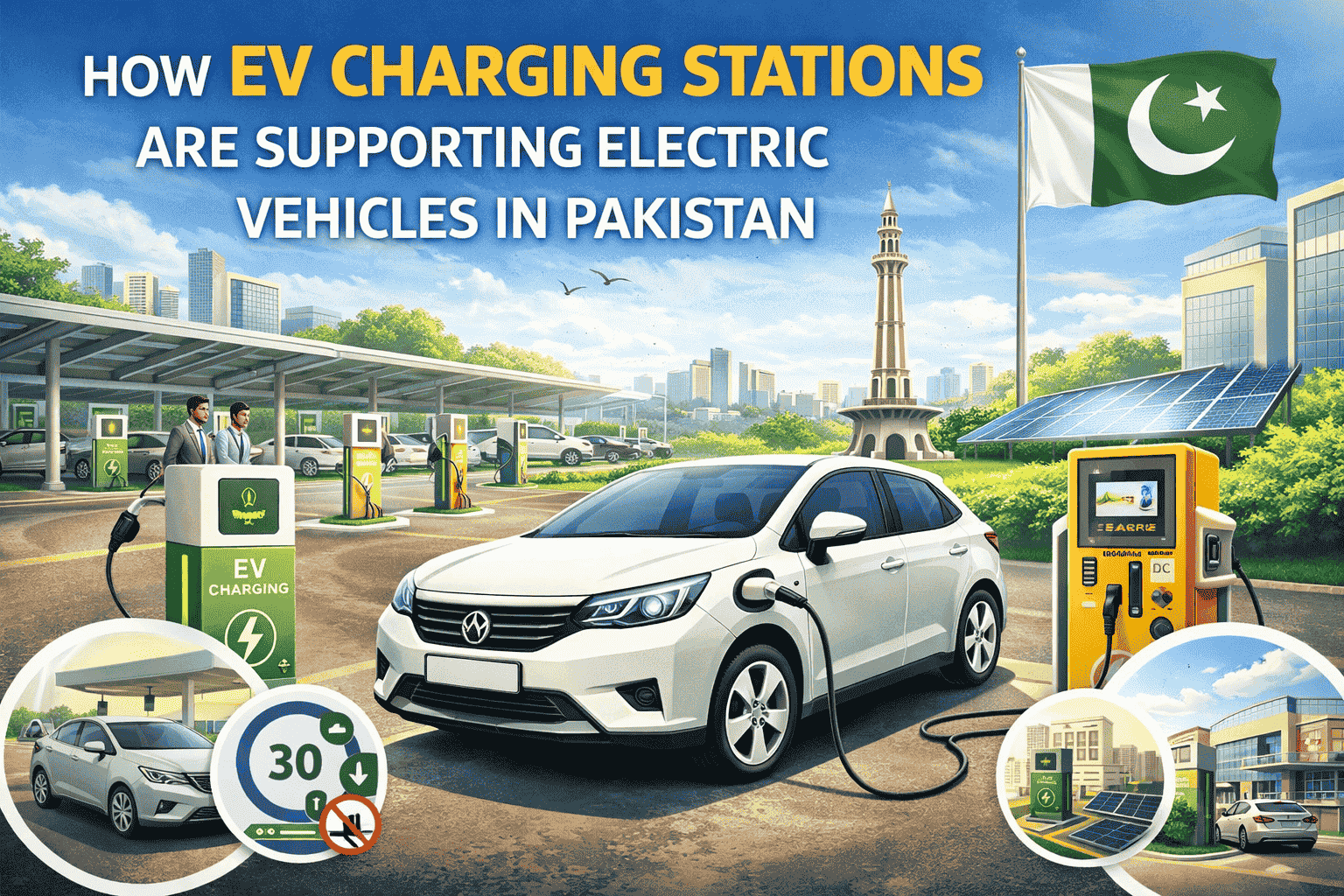
How EV Charging Stations Are Supporting Electric Vehicles in Pakistan

As the world moves toward sustainable mobility, EV charging stations in Pakistan are becoming a crucial part of the country’s transportation ecosystem. With rising fuel prices and increasing environmental concerns, electric vehicles (EVs) are gaining attention as a practical alternative.
However, the success of EV adoption depends heavily on the availability of a reliable electric vehicle charging station network. Without accessible EV charging stations, the transition to electric mobility cannot scale effectively.
Pakistan is still in the early stages of this transition, but momentum is building as both government initiatives and private investments begin to shape the EV landscape, supported by policies such as the Electric Vehicle Policy in Pakistan.
Understanding EV Charging Infrastructure

An EV charging station is designed to supply electric energy to recharge EVs, and it plays a central role in enabling daily EV usage. These electric charging stations are broadly categorized into:
- AC chargers (7 kW – 22 kW) – commonly used in homes, offices, and hotels
- Dual AC Chargers (44 KW, Dual EcoPillar) – charges upto 2 EVs simultaneously and suitable for shared commercial or residential parking.
- DC fast chargers (30 kW – 480 kW) – used in commercial spaces and highways for rapid charging
With advancements in technology, modern electric vehicle charging stations now offer features such as smart monitoring, mobile app control, and digital payment systems.
The development and deployment of such systems are increasingly guided by evolving standards and frameworks like EV charging infrastructure regulations in Pakistan, which aim to streamline installations and operations.
Current Landscape of EV Charging Stations in Pakistan

While progress is being made, several challenges continue to impact the growth of EV charging stations in Pakistan.
Addressing these barriers is essential to building a reliable and scalable network of electric vehicle charging stations across the country.
1) Infrastructure and Grid Limitations
Pakistan’s power grid faces capacity constraints, and scaling up electric vehicle charging stations requires upgrades and careful planning. These challenges are closely linked to broader energy concerns such as Pakistan’s electricity infrastructure challenges.
2) High Installation and Setup Costs
Setting up an EV charging station, especially DC fast chargers, involves high upfront investment. These costs can discourage small and medium businesses from deploying electric charging stations, slowing down the overall growth of charging infrastructure across commercial and public locations.
3) Limited Consumer Awareness
Awareness remains a key barrier in the adoption of electric car charging stations. Many consumers are still unfamiliar with how EV charging stations function, which affects demand. As education and awareness improve, the usage of charging stations is expected to increase.
4) Regulatory and Policy Gaps
Although policies exist, clearer implementation frameworks are needed. Updated guidelines such as EV charging regulations in Pakistan and tariff structures like the NEPRA EV charging tariff framework are helping shape the regulatory environment.
Emerging Trends in EV Charging in Pakistan
As the EV ecosystem continues to develop, several key trends are shaping the future of EV charging stations in Pakistan. These trends highlight how technology, user demand, and infrastructure planning are evolving to support the rapid growth of electric mobility across the country.
1) Growing Demand for Fast Charging
The demand for faster charging solutions is increasing across Pakistan. DC fast EV charging stations are becoming more popular as they can charge up to 80% in 30–45 minutes.
This makes them ideal for commercial locations, fleets, and highway corridors where quick turnaround is essential.
2) Integration of Smart Technologies
Modern electric charging stations are evolving with smart features such as real-time monitoring, remote diagnostics, and digital payment systems.
These advancements improve user convenience and allow operators to manage electric vehicle charging stations more efficiently, ensuring better performance and reduced operational challenges.
3) Shift Toward Scalable Infrastructure
Businesses are increasingly investing in scalable EV charging stations that can expand as demand grows. This flexible approach allows commercial spaces like malls, hotels, and offices to start small and gradually scale their electric vehicle charging station infrastructure based on future EV adoption.
4) Adoption of Renewable Energy Integration
The integration of solar-powered electric charging stations is gaining attention as a sustainable solution. Research such as solar-powered EV charging systems highlights its long-term potential.
5) Focus on Commercial and Public Deployment
There is a growing focus on installing electric car charging stations in high-traffic commercial and public areas. Locations such as malls, office complexes, and parking facilities are prioritizing accessible charging stations to meet rising demand and support the expanding EV user base.
Opportunities for Growth

As Pakistan’s EV ecosystem continues to evolve, the expansion of EV charging stations in Pakistan is unlocking new opportunities across multiple sectors. With increasing EV adoption and infrastructure demand, businesses and developers have a strong chance to capitalize on this growing market.
Key opportunities include:
- Commercial Spaces
Shopping malls, hotels, and office buildings can install electric vehicle charging stations to attract EV users, increase footfall, and enhance customer experience. - Fleet & Logistics Sector
Fleet operators and logistics companies are rapidly exploring electrification, driving demand for high-capacity EV charging stations that support multiple vehicles efficiently. - Residential Developments
As urban housing grows, there is rising demand for electric car charging stations in apartments and gated communities to support everyday EV charging needs. - Highway & Public Infrastructure
Expanding charging stations along highways and public routes will enable long-distance EV travel and reduce range anxiety.
Why EV Charging Infrastructure Matters

A strong network of EV charging stations in Pakistan is essential for building confidence among EV users. Without accessible and reliable electric charging stations, even interested consumers may hesitate to switch to electric vehicles.
Well-developed infrastructure ensures:
- Convenience for daily EV users
- Support for long-distance travel
- Reduced dependence on fossil fuels
- Lower emissions and improved air quality
Standards and consumer frameworks such as EV consumer service and infrastructure guidelines are also helping improve user trust and service quality.
Powering Pakistan’s EV Future with CITA EV Charger

As EV charging stations in Pakistan continue to expand, choosing the right partner is key to building reliable infrastructure. CITA EV Charger is one of the leading EV charging companies, offering advanced AC and DC EV charging stations for residential, commercial, and fleet applications.
With smart technology, scalable solutions, and high-performance systems, CITA EV supports the growing demand for efficient electric vehicle charging station networks across Pakistan.
Looking to install EV charging stations?
Request a free consultation today and start building your EV charging network with CITA EV Charger.
