
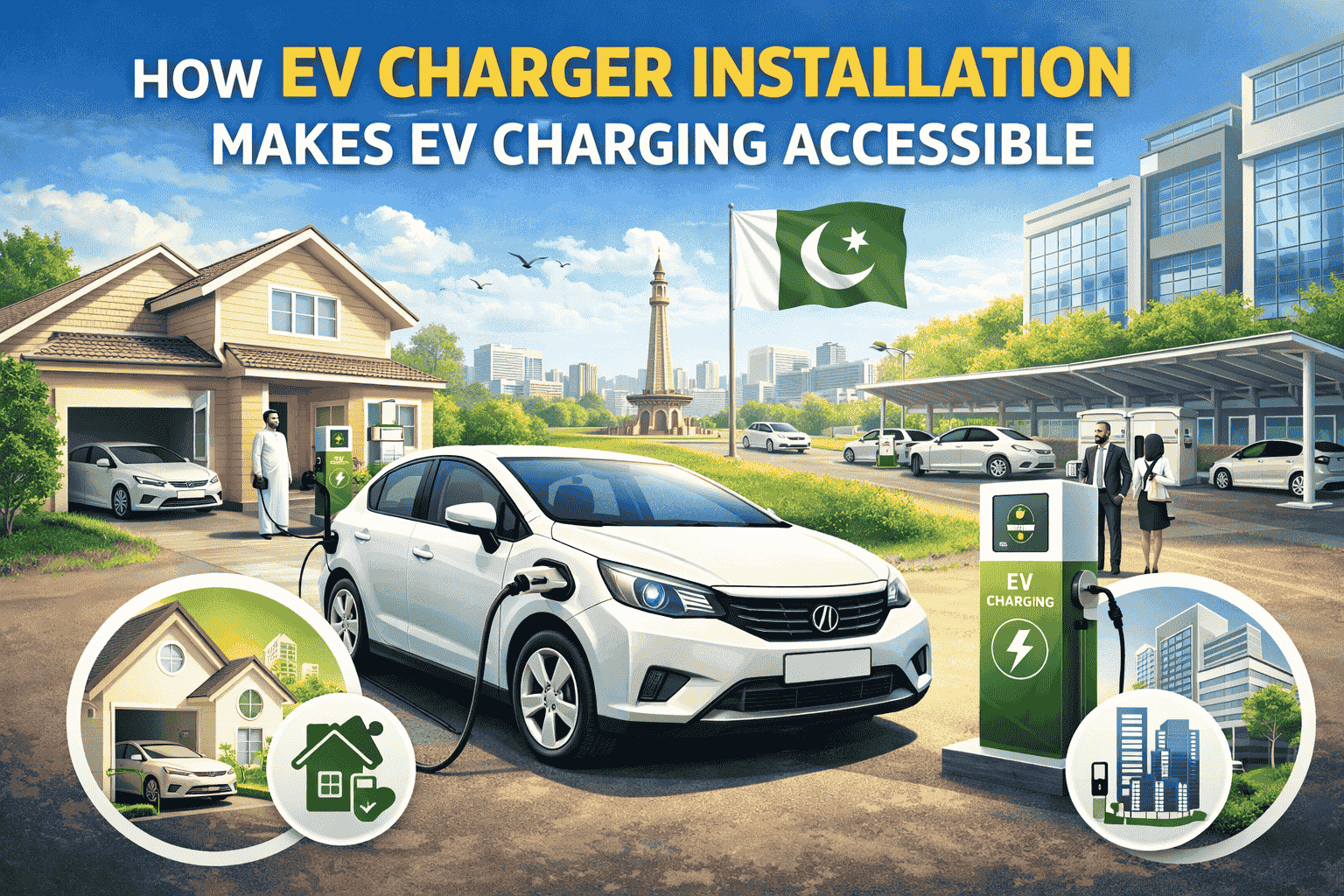
How EV Charger Installation Makes EV Charging Accessible for Homes and Businesses

EV charger installation is becoming increasingly important in Pakistan as electric vehicles slowly enter the mainstream. With rising fuel prices and growing interest in sustainable transport, more individuals and businesses are exploring how to install reliable charging solutions. According to recent developments and policy direction under Pakistan’s Electric Vehicle Policy, the country aims to significantly increase EV adoption in the coming years.
However, one of the biggest challenges remains the lack of awareness around electric vehicle charger installation and how it works in real-world scenarios. Whether you are a homeowner, business owner, or fleet operator, understanding the installation process is key to making the right decision.
Why EV Charger Installation is Essential for Pakistan’s EV Growth

As electric vehicles gain momentum in Pakistan, EV charger installation is becoming a key part of building a reliable mobility ecosystem. It’s not just about setting up equipment – it’s about ensuring easy, safe, and consistent access to charging.
A well-planned electric car charger installation supports everyday use across homes, offices, and public spaces. Whether it’s residential charging or large-scale electric charging station installation, each setup plays a role in expanding EV adoption.
It matters because it:
- Supports EV adoption by improving accessibility
- Reduces fuel dependency and long-term costs
- Provides daily charging convenience
- Future-proofs homes and businesses
As EV demand grows, reliable electric vehicle charger installation will become essential, not optional.
Step-by-Step EV Charger Installation Process

Installing an electric vehicle charging station installation system is not just about placing a charger – it requires proper planning, technical evaluation, and safety compliance. Whether you are setting up at home or for commercial use, following the right process ensures long-term performance and reliability.
Here are the key steps you should follow for a successful EV charger installation:
1) Site Assessment
Before starting the installation, it is important to evaluate the site carefully. This includes identifying where the charger will be placed, checking the distance from the electrical panel, and ensuring there is proper parking access for the vehicle.
For homes, this is usually a garage or parking area, while for businesses it may involve larger layouts. A proper site assessment helps avoid future installation issues and ensures smooth cable routing and accessibility.
2) Load Calculation & Power Requirements
The next step is to understand your electrical capacity. A professional electrician will assess whether your current system can support the additional load of an electric car charging station installation.
In many cases, especially in Pakistan, electrical upgrades may be required due to grid limitations are a known factor, as discussed in insights around Pakistan’s electricity infrastructure challenges. This step is critical because overloading your system can lead to safety risks and poor performance of the charging station.
3) Selecting the Right Charger
Choosing the right charger is one of the most important decisions. AC chargers are ideal for homes and low-usage scenarios, while DC fast chargers are better suited for commercial and high-demand locations.
Factors such as charging speed, budget, vehicle compatibility, and future scalability should be considered. A well-chosen charger ensures efficiency, cost-effectiveness, and user satisfaction over time.
4) Installation & Wiring
Once everything is planned, the actual installation begins. This includes mounting the charger, setting up proper wiring, installing safety components, and connecting it to the power source.
Professional installation is highly recommended to ensure compliance with safety standards. Proper wiring and grounding are essential to avoid electrical hazards and ensure long-term durability of the system.
5) Testing & Commissioning
After installation, the system must be tested thoroughly. This includes checking power flow, verifying charging speed, and ensuring all safety features are functioning correctly.
Commissioning also involves configuring smart features such as app connectivity or payment systems if applicable. This final step ensures your EV charger installation is fully operational and ready for daily use.
Types of EV Chargers for Installation
Before you install an electric car charger, it is important to understand the different types of EV chargers available and how they suit different use cases. Selecting the wrong type can lead to inefficiency, higher costs, or a poor user experience.
Here are the main types of chargers used in electric vehicle charger installation:
1) AC Chargers (Slow to Moderate Charging)

AC chargers are the most common type used for residential and small commercial setups. They typically range from 7 kW to 22 kW and are ideal for overnight charging or long-duration parking.
These chargers are cost-effective, easier to install, and require less power infrastructure. For most EV owners in Pakistan, AC chargers provide a practical and reliable solution for daily use without putting too much load on the grid. They are especially suitable for homes, apartments, offices, and small businesses where vehicles remain parked for extended periods.
2) DC Fast Chargers (Rapid Charging)

DC fast chargers are designed for speed and high performance. They can charge an EV up to 80% in around 30–45 minutes, making them suitable for commercial locations, highways, and fleet operations.
However, DC electric charging stations require higher investment and stronger electrical infrastructure. Depending on the scale and usage, different types of DC chargers are suitable for different applications:
- Compact Commercial Spaces (30 kW DC Chargers)
For smaller commercial setups such as cafes, retail outlets, or small parking areas, compact DC chargers like 30kW units are ideal. They offer faster charging than AC while keeping installation and power requirements manageable.
- Mid- to High-Traffic Locations (DC ECO Series)
For locations like shopping malls, office complexes, and public parking areas, chargers like DC ECO (80 kW–160 kW) are more suitable. These support multiple vehicles and provide efficient load distribution, making them ideal for moderate- to high-traffic environments.
- High-Demand & Fleet Applications (DC PRO Series)
For heavy-duty applications such as highways, fleet hubs, and large commercial spaces, ultra-fast chargers like DC PRO (240 kW–480 kW) are the best choice. These chargers can support multiple EVs simultaneously and are designed for high throughput and continuous usage.
Regulations and Compliance in Pakistan

When planning an EV charger installation, understanding regulations is extremely important. Compliance ensures safety, avoids legal issues, and guarantees long-term reliability of your system. Pakistan is actively developing its EV framework, and staying updated with these regulations is essential.
Authorities such as NEECA and NEPRA are introducing guidelines for electric vehicle charging station installation, covering safety standards, installation procedures, and energy tariffs. Following these guidelines helps ensure that your charging station meets national standards.
Additionally, proper permits, certified equipment, professional installation and tariff structures like the NEPRA EV Charging Tariff Framework are shaping the cost structure of charging stations.
Ignoring compliance can lead to operational risks, penalties, or system failures. Therefore, always ensure your installation follows the latest regulatory framework and safety practices.
Cost of EV Charger Installation in Pakistan

Understanding the cost of electric vehicle charger installation is important before making any decision. The total investment can vary depending on several factors, and proper planning can help optimize costs while ensuring quality installation.
For residential setups, AC chargers are more affordable and require minimal upgrades. However, commercial installations, especially DC fast chargers, involve higher costs due to equipment, electrical upgrades, and infrastructure requirements. Installation complexity, site conditions, and distance from power supply also impact the total cost.
Although the upfront investment may seem high, it is important to consider long-term benefits. EV charging reduces fuel expenses, lowers maintenance costs, and increases property value. For businesses, it also creates an additional revenue stream and attracts more customers.
Common Challenges in EV Charger Installation

While the demand for EV charger installation is growing, several challenges still exist, especially in developing markets like Pakistan.
Understanding these challenges can help you plan better and avoid common mistakes.
Power Availability Issues: In many areas, especially outside major cities, the power grid may not support high-capacity chargers. This makes it difficult to install DC fast chargers without additional upgrades or backup solutions.
High Initial Investment: The cost of installing an electric charging station installation system can be a barrier, particularly for small businesses. Equipment, infrastructure, and installation costs all add up.
Lack of Awareness: Many users are still unfamiliar with how to install electric car charger systems or how they work. This lack of awareness slows down adoption and demand.
Limited Infrastructure: Pakistan’s EV ecosystem is still developing, which means limited availability of public charging stations and support systems.
Home vs. Commercial Installation: What to Choose?
Choosing between home and commercial EV charger installation depends on your needs, budget, and long-term goals. Each option offers different benefits and use cases.
1) Home Installation
Home EV charging is ideal for personal EV owners who want convenience and cost savings. It allows you to charge your vehicle overnight and avoid public charging stations. Installation is simpler and more affordable, making it a practical choice for most users.
2) Commercial Installation
Commercial EV charging is designed for businesses and high-traffic locations. It supports multiple users and creates a revenue opportunity. Although the investment is higher, it offers long-term returns and helps businesses stay ahead in the EV ecosystem.
Powering Your EV Journey with the Right Installation Partner

Choosing the right partner for EV charger installation can make a significant difference in performance, safety, and long-term reliability.
Companies like CITA EV Charger offer advanced solutions for both AC and DC electric vehicle charger installation, tailored for residential, commercial, and fleet applications in Pakistan.
Planning to install an EV charger?
Request a free consultation today and get expert guidance on the right installation solution for your needs.
